
Every year, lakhs of NEET-qualified students dream of becoming doctors, but limited government MBBS seats and the rising cost of private medical education make that journey challenging. As a result, studying MBBS abroad has become an increasingly popular option for Indian students.
Among all international destinations, Russia continues to be one of the most preferred choices due to its affordable tuition fees, globally recognized universities, and long history of educating Indian medical aspirants. However, choosing MBBS in Russia involves much more than just selecting a university it requires understanding NMC regulations, eligibility criteria, course structure, costs, licensing requirements, and life as an international student.
In this comprehensive guide, we will cover everything you need to know about MBBS in Russia for Indian students in 2026.
MBBS in Russia ?
MBBS in Russia refers to a six-year medical degree program offered by Russian medical universities to both local and international students. For many years, Russia has been one of the most popular destinations for Indian students who want to pursue a medical career but are unable to secure a government MBBS seat in India.
Russian medical universities are known for their affordable tuition fees, modern infrastructure, and globally recognized medical programs. Most universities offer MBBS courses in English for international students, making it easier for Indian students to adapt to the academic environment.
The course combines classroom learning, laboratory training, and clinical exposure in hospitals. During the initial years, students study basic medical sciences such as Anatomy, Physiology, and Biochemistry. In the later years, they receive practical training in hospitals and learn clinical subjects such as Medicine, Surgery, Pediatrics, and Gynecology.
However, before choosing MBBS in Russia, students must understand the course structure, NMC regulations, eligibility requirements, costs, and licensing process in India. Knowing these factors can help students make an informed decision about whether studying medicine in Russia is the right choice for them
Course Duration and Structure
The MBBS program in Russia is generally completed over a period of six years. The course is designed to provide students with a strong foundation in medical sciences along with practical clinical training in hospitals.
Pre-Clinical Years (Years 1–3)
During the first three years, students focus on the basic medical sciences that form the foundation of medical education. Subjects commonly taught during this phase include Anatomy, Physiology, Biochemistry, Histology, Microbiology, and Pathology. These years mainly involve classroom lectures, laboratory sessions, and practical learning.
Clinical Years (Years 4–6)
The later years of the program focus on clinical medicine and hospital-based training. Students study subjects such as Internal Medicine, Surgery, Pediatrics, Obstetrics and Gynecology, Psychiatry, and Emergency Medicine. During this period, they gain hands-on experience by interacting with patients and observing medical procedures under the supervision of experienced doctors.
Internship and Practical Training
The final year includes mandatory clinical training and internship activities that allow students to apply their medical knowledge in real healthcare settings. According to NMC regulations, students must complete the required internship and practical training at the same university where they pursue their medical degree.
The six-year structure aims to ensure that students develop both theoretical knowledge and clinical skills required to become competent medical professionals.
Pros and Cons of studying MBBS in Russia for Indian students
| Pros | Cons |
| Affordable Tuition Fees: Compared to many private medical colleges in India, MBBS in Russia is often significantly more affordable. | Harsh Weather Conditions: Winters in many Russian cities can be extremely cold, which may be difficult for some students to adapt to. |
| No Donation or Capitation Fees: Most Russian universities do not charge donations, making the admission process more transparent. | Language Barrier During Clinical Training: Although the course may be taught in English, students often need to learn Russian to communicate with local patients during hospital rotations |
| Globally Recognized Universities: Many Russian medical universities are recognized by international organizations and accepted by the National Medical Commission (NMC) of India. | FMGE/NExT Requirement: Graduates must clear the licensing examination in India before they can practice medicine. |
| Simple Admission Process: Students generally do not have to clear additional entrance exams apart from qualifying NEET. | Distance from Home: Being far from family can be challenging, especially during emergencies or holidays. |
| Modern Infrastructure: Many universities offer well-equipped laboratories, digital learning facilities, libraries, and teaching hospitals. | Variation in University Quality: Not all universities provide the same level of clinical exposure and academic support, making university selection extremely important. |
| Large Indian Student Community: Thousands of Indian students study in Russia, making it easier for newcomers to adapt to the environment | Cultural Adjustment: Students may initially face difficulties adapting to a new culture, food habits, and lifestyle |
| International Exposure: Students get the opportunity to study in a multicultural environment and gain global exposure. |
MBBS Fees: Russia vs. India
In India, private medical college fees usually range between ₹90 lakh and ₹1 Cr for the full MBBS program. In contrast, Russia offers the same degree at a much lower cost, between ₹15 lakh and ₹30 lakh, depending on the university.
The MBBS course in Russia lasts six years, including a mandatory one-year internship. In India, the MBBS program typically spans 5.5 years, but the internship is often not included within the course duration.
Key Differences Between MBBS in India and Russia
The most noticeable difference lies in the cost of education, with Russian medical colleges offering a significantly more affordable option for Indian students.
Russian MBBS programs run for six years and include a mandatory internship, which helps students gain practical experience during their studies. In India, although MBBS programs generally last 5.5 years, the internship usually takes place after the main academic course.
Another important advantage of studying in Russia is the global recognition of their medical degrees, which gives Indian students better flexibility and more career options internationally.
Is MBBS in Russia Worth It for Indian Students in 2026?
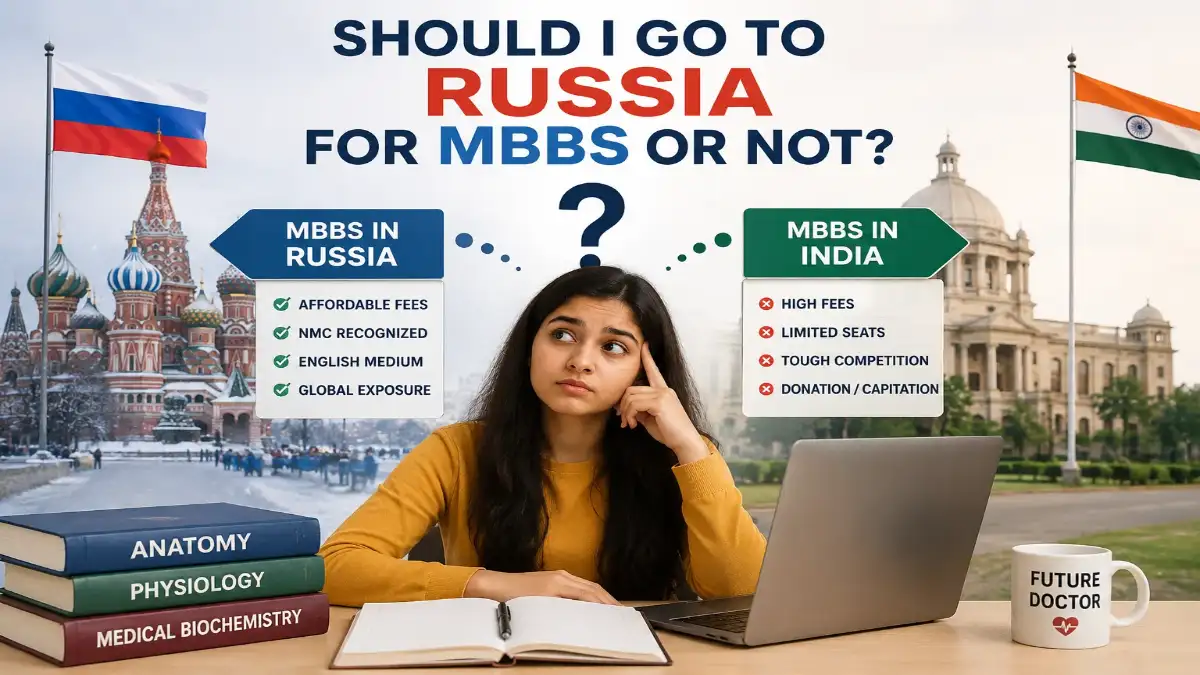
The answer depends on your goals, budget, and expectations. If you are unable to secure a government MBBS seat in India and private medical college fees seem unaffordable, MBBS in Russia can be a practical and cost-effective alternative. Russian universities offer affordable education, internationally recognized degrees, and opportunities to gain global exposure.
However, studying medicine in Russia also comes with responsibilities. Students must carefully choose an NMC-compliant university, adapt to a different culture and climate, learn basic Russian for clinical practice, and prepare seriously for FMGE/NExT if they plan to practice in India.
For motivated students who are willing to work hard and choose the right university, MBBS in Russia can be a worthwhile investment in their medical career. The key is not just studying abroad, but making an informed decision before taking this important step
Need Help Choosing the Right University?
Choosing the right university is one of the most important decisions in your MBBS journey. Factors such as NMC compliance, clinical exposure, city, fees, hostel facilities, and overall student support can greatly influence your experience and future career opportunities.
If you are unsure which Russian university best fits your budget and career goals, consider seeking expert guidance before making a final decision. The professionals at RM Group of Education can help you understand your options and provide support with university selection, admissions, documentation, and the overall application process.